
Situational Comedy Techniques for Character and Timing
Mastering situational comedy acting techniques requires a strong balance between technical control and natural performance. Comedy actors working in sitcoms must understand how humour develops from everyday situations, character relationships, and evolving conflict within a story. Unlike other genres, situational comedy depends heavily on how believable characters respond to heightened or unexpected circumstances. This requires performers to stay grounded while delivering effective comedic results through timing, reactions, and interaction with others.
Developing comedic skills involves consistent practice, script awareness, and the ability to adapt across stage, camera, and voice work while maintaining clarity and engagement for the audience, especially for those positioning themselves as an Asian comedy actor for hire within a competitive global industry.
Situational comedy also demands awareness of pacing within a scene. The rhythm of dialogue, reactions, and movement all contribute to how humour is perceived. Actors must remain attentive not only to their own performance but also to the energy of the scene as a whole. This shared awareness allows comedic moments to develop naturally and keeps the performance connected to the audience’s expectations. When actors fully understand the structure of a sitcom scene, they are able to deliver performances that feel both controlled and spontaneous at the same time.
Another important factor is consistency. Sitcoms often rely on recurring characters and repeated situations, so actors must maintain continuity in behaviour, tone, and emotional responses. This consistency helps audiences build familiarity with characters, making comedic moments more effective over time. By combining technical awareness with natural expression, actors can develop performances that feel engaging, structured, and believable, which is particularly valuable for performers aiming to establish themselves as a reliable Asian actor available for booking across film, television, and digital productions.
Understanding the Foundations of Situational Comedy and How Actors Create Believable Comedic Conflict
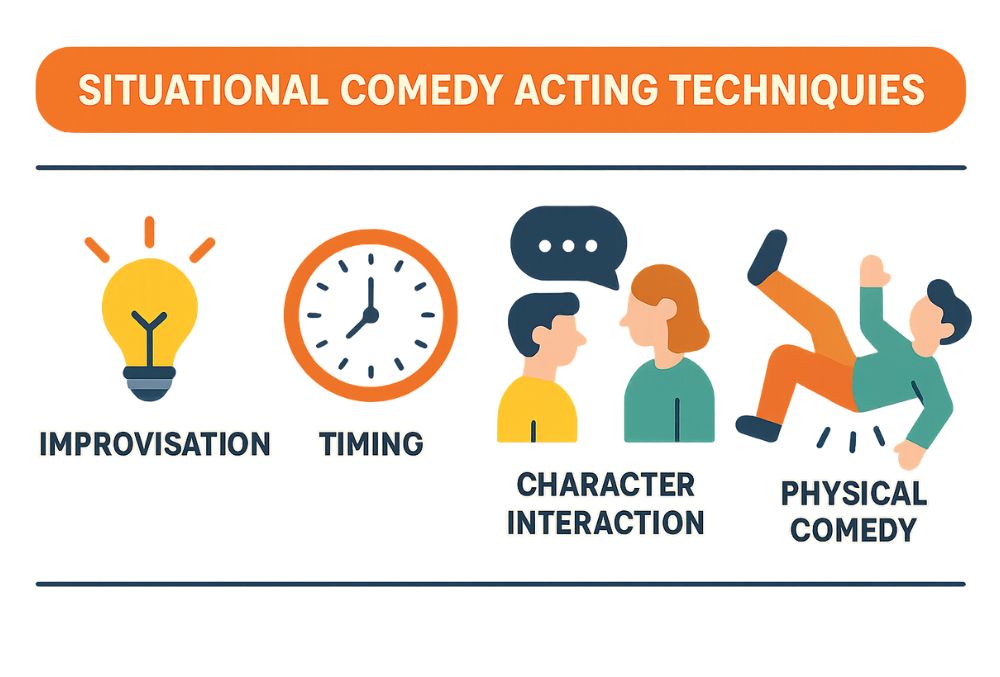
Situational comedy relies on structured storytelling where humour grows from conflict, relationships, and character behaviour rather than isolated jokes. Actors must understand the conflict storyline within a sitcom scene, as this drives both pacing and the audience’s reactions. A strong comedic scene often begins with a simple objective that becomes complicated through misunderstanding, exaggeration, or contrast between characters. This allows humour to develop naturally without forcing jokes into the performance.
Actors must also recognise that characters is important in shaping humour. A lovable loser, an overconfident personality, or a highly controlled character can all generate comedy when placed in the wrong situation. These contrasts create tension that leads to engaging comedic performances. By focusing on relationships and story progression, actors create scenes that feel authentic and consistent across different performance settings.
Understanding how conflict builds across multiple scenes is equally important. Sitcoms often rely on recurring misunderstandings or repeated behavioural patterns that escalate over time. Actors who recognise these patterns can use them to strengthen their performance and maintain continuity throughout the story. This awareness helps performers anticipate how a situation might develop and respond in a way that supports both humour and narrative flow.
In addition, actors should pay attention to how dialogue supports conflict. Lines are often written to create tension, misunderstanding, or contrast between characters. By identifying these moments within the script, actors can deliver performances that highlight the underlying conflict rather than simply focusing on surface-level humour.
Building Strong Sitcom Characters through Observation, Behavioural Detail, and Emotional Truth
Creating sitcom characters requires attention to behavioural detail and a strong understanding of human interaction. Actors benefit from observing real-life situations and translating those details into performance choices. Body language, tone of voice, and emotional responses all contribute to believability, which strengthens comedic impact.
Character Element | Performance Focus | Practical Application | Outcome |
Behavioural detail | Body language and tone | Observe real interactions and replicate patterns | Stronger believability |
Emotional grounding | Clear objectives and reactions | Connect humour to real motivations | More relatable performance |
Character consistency | Repeated traits and habits | Maintain behaviour across scenes | Memorable sitcom characters |
Actors should imagine how a character responds under pressure within a comedic setting. This helps maintain consistency across scenes and supports improvisation during rehearsals and auditions. Developing a sitcom character you know well allows for more confident and flexible performance choices.
Comedic acting also benefits from emotional grounding. Even in humorous situations, characters often pursue clear objectives. Maintaining emotional truth ensures that humour feels natural and relatable rather than exaggerated or forced.Actors should also consider how their character evolves over time. Even in episodic formats, subtle growth or repeated behavioural traits can make a character more engaging. This depth allows comedic moments to feel earned rather than random.
Another useful approach is to build a backstory for the character, even if it is not directly shown in the script. Understanding a character’s history, habits, and motivations helps actors make more informed decisions during performance. This preparation supports stronger character consistency and allows actors to respond more naturally within a scene.
Refining Comedic Timing, Delivery, and Reactions for Stronger Audience Engagement on Screen
Timing remains one of the most important acting techniques in situational comedy. Delivering lines with the correct pace affects how jokes are received by the audience. Actors must develop an acute sense of timing by listening carefully and responding in a way that fits the rhythm of the scene.Pauses, silence, and reactions often carry as much impact as spoken dialogue. A delayed response or subtle facial expression can strengthen comedic effect. This is especially relevant for camera work, where small details are clearly visible.
Practising with scripts helps actors identify comedic beats and understand how timing influences delivery. Rehearsing variations of a scene allows performers to refine their approach and achieve more consistent results. Actors should also observe how different performers handle timing to expand their own range of techniques.
It is also important to understand how timing interacts with editing and camera work in filmed productions. A reaction shot, a cutaway, or a close-up can all influence how a comedic moment is perceived. Actors who are aware of these elements can adjust their performance to align with the technical aspects of production.
Developing strong listening skills is equally important. Comedy often depends on how actors respond to one another rather than delivering lines in isolation. By staying fully engaged in the scene, actors can create more natural and effective comedic exchanges.
Using Script Analysis, Improvisation, and Physical Expression to Strengthen Comedic Performances
Effective comedic performances rely on a balance between preparation and spontaneity, where actors combine structured understanding with natural responsiveness. Script analysis helps performers break down scenes by identifying objectives, relationships, and shifts in energy, allowing them to make informed choices that support both clarity and consistency. When actors fully understand the structure of a scene, they are better equipped to deliver performances that feel grounded while still allowing room for creative variation.
Improvisation further strengthens this process by encouraging adaptability. Actors who regularly practise improvisation become more responsive to changes within a scene, whether during rehearsal or live performance. This flexibility supports stronger interaction between characters and allows humour to develop organically rather than feeling forced.
Physical expression adds another dimension to comedic acting. Movement, posture, and gesture can reinforce humour without relying solely on dialogue. For stage performances, clear and expressive physicality ensures visibility, while for camera work, controlled and precise movement helps maintain focus within the frame. By adjusting physical choices, actors can influence how a scene is perceived and uncover new layers within a character.
Experimenting with rhythm and tempo also contributes to comedic effect. Variations in movement speed or timing can shift the tone of a scene and highlight different aspects of humour. When combined with a strong understanding of the script, these physical and improvisational elements create performances that feel both structured and expressive.
- Analysing scripts to identify objectives, relationships, and scene progression
- Developing adaptability through regular improvisation practice
- Using posture, gesture, and movement to reinforce comedic moments
- Modifying tempo and rhythm to shape audience perception of humour
- Exploring alternative physical choices to expand character possibilities
Preparing for Auditions and Casting Opportunities with Situational Comedy Acting Techniques
Auditions for situational comedy require a clear understanding of both performance technique and character interpretation. Casting professionals look for actors who can present believable and engaging comedic performances while maintaining strong timing and delivery. Preparation begins with analysing the script to identify the character’s objective and how it fits within the scene. This helps actors make confident and consistent performance choices. Practising different delivery comedy styles allows actors to explore how pacing, tone, and emphasis affect comedic impact. This flexibility becomes particularly useful when adjustments are requested during auditions. Actors who can adapt quickly while maintaining character integrity often leave a stronger impression.
Confidence plays a significant role in casting situations. Clear decision-making, steady focus, and controlled delivery contribute to a more professional and convincing performance. Regular rehearsal of monologues and short scenes supports this confidence and helps maintain consistency under pressure.
Attention to technical details can further improve audition outcomes. Understanding camera framing, positioning, and how expressions appear on screen allows actors to adjust their performance for different formats. Maintaining awareness from the moment of entry to the final exit ensures that the performance remains complete and engaging throughout.
- Identifying character objectives to create clear and focused performances
- Practising varied delivery styles to improve flexibility during auditions
- Building confidence through consistent rehearsal and scene practice
- Demonstrating adaptability when receiving direction from casting professionals
- Adjusting performance based on camera framing and on-screen presence
Developing Consistent Practice Routines and Advancing through Collaboration and Performance Opportunities
Improving comedic skills requires structured practice and continuous evaluation. Actors benefit from routines that focus on timing, character development, and improvisation. Consistent training helps techniques become natural over time. Working with other actors supports the development of listening and response skills. Group rehearsals and workshops provide opportunities to test different comedic approaches and refine performance quality. Self-evaluation through recording and reviewing performances allows actors to identify strengths and areas for improvement.
Actors should also engage with a wide range of material, including scripts, short scenes, and performance exercises. This helps build versatility and prepares them for different types of roles within situational comedy. Setting clear goals and tracking progress supports long term development and keeps training focused.
Exposure to different performance environments also plays an important role in growth. Performing on stage, in front of a camera, or through voice acting each requires slightly different techniques. Actors who explore these formats develop a broader skill set and become more adaptable within the industry.
If you are looking to bring authentic comedic performances into your next project, collaborate with Kwok One, a versatile actor, martial artist, and theatre professional with experience across film, stage, and voice work. His multilingual background and strong screen presence make him a reliable choice for directors, producers, and casting teams seeking a skilled performer.
Whether for scripted productions, commercial work, or creative collaborations, working with Kwok One offers the opportunity to deliver engaging characters and high-quality performances suited to diverse audiences.