
Common Scams in Martial Arts Actor Hiring: How to Protect Your Production
The search for talented martial arts actors can be challenging even under ideal conditions. Rising demand for authentic action performers has also led to a growing wave of scams that target casting directors, producers, and event organizers. Many of these scams appear professional at first glance, making it easy for even experienced teams to fall into traps that waste time, drain budgets, and compromise production safety.
Understanding common scams in martial arts actor hiring helps protect your project from unnecessary risk. Clear knowledge, strong vetting habits, and reliable industry connections create a safer path for finding actors who bring skill, discipline, and professionalism to the screen. This overview outlines the most frequent scam tactics that affect martial arts casting and offers practical steps to keep your team and production secure.
Recognizing Red Flags in Martial Arts Casting and Audition Notices
Casting scams often begin with a misleading notice. These scams target both actors and casting professionals by presenting opportunities that look legitimate but fall apart under closer inspection. The martial arts niche is especially vulnerable because specialized skills create an easy opening for exaggerated claims, falsified experience, and fabricated credits.
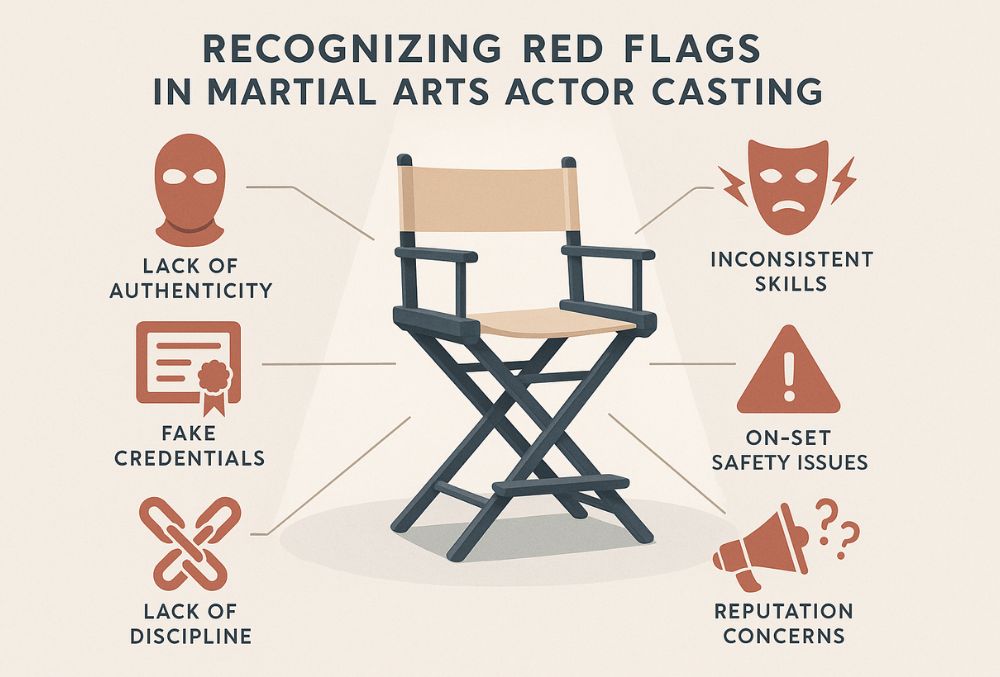
A major warning sign is a casting notice that appears through unverified channels. While industry platforms are common places to share calls, scammers increasingly use private messages or generic social media posts to advertise roles. These notices often provide limited information about the project, the production company, and essential casting details. Vague descriptions, missing contact information, or requests to bypass normal submission procedures should prompt immediate caution.
Another red flag is inconsistent information within the notice itself. Scammers may use stolen images, poorly edited text, or contradictory job details to appear credible. Unusual requirements for headshots, personal data, or video submissions can also signal a scam. Any demand for secrecy or urgent responses should be treated with skepticism.
Verifying every notice protects casting teams from fake offers that can cause delays or put confidential project information at risk. Checking the production company, confirming identities, and cross-referencing job details through official channels keeps the audition process aligned with industry standards. Staying aware of these red flags helps ensure that martial arts casting begins on solid ground and supports the safe selection of trustworthy talent.
Understanding Job Scams Targeting Martial Arts Actors and Casting Teams
Job scams have become common across the entertainment industry, but martial arts productions face unique risks due to the specialized nature of the work. These scams frequently involve false promises, inflated claims about project visibility, and deceptive financial requests. Scammers often pose as agents, producers, or coordinators and target individuals seeking skilled martial arts actors for demanding roles.
One of the most recognizable warning signs is a job offer that requires an upfront payment. Requests for application fees, training costs, or exclusive access charges are common tactics used to exploit busy professionals. Authentic casting never requires financial contributions from actors or hiring teams. Any job that insists on a payment before an audition or callback should be avoided.
Another tactic involves fabricated guarantees. Scammers often claim to provide direct access to high-profile martial arts projects or assure participants of a role without proper auditions. These promises are designed to pressure individuals into quick decisions. Authentic productions rely on structured evaluation, clear contracts, and transparent communication.
Scammers may also use fake credentials to support their claims. They may present fabricated resumes, stolen footage, or staged testimonials to appear established in the industry. Verifying past credits, checking references, and searching for reviews can quickly uncover inconsistencies.
Understanding these common job scams allows casting teams to establish stronger safeguards. By confirming all details through official channels and avoiding rushed commitments, producers and casting directors maintain control over the hiring process and protect their teams from deceptive job offers that target martial arts projects.
Spotting Task-Based and Digital Recruitment Scams in Online Searches
As digital casting platforms grow, task scams have become one of the more sophisticated threats in martial arts actor hiring. These scams often involve fraudulent assignments sent through email, online messaging platforms, or imitation casting portals. The format looks professional, and the tasks are often tailored to appear relevant to action-based roles.
These assignments may ask actors or casting teams to perform unusual prep work, produce self-tapes under unrealistic conditions, or complete tasks unrelated to the audition process. Scammers may also request personal information or suggest fee-based submissions disguised as processing requirements. Many victims do not recognize the scam until after time and resources have already been wasted.
Task scams target industry professionals by replicating the tone and structure of legitimate assignments. They may impersonate real agencies or coordinators, using spoofed email addresses or copied branding. These tactics make it difficult to identify fraud without careful verification.
Safeguarding against these scams requires consistent attention to detail. Confirm all assignments through official websites, authenticated email domains, or direct contact with known agency representatives. Avoid completing tasks that seem unrelated to the casting purpose, and question any assignment that carries unclear expectations or requests for sensitive information.
Production teams can also use strong internal processes to prevent exposure. Establishing clear communication guidelines, using centralized casting channels, and sharing industry knowledge with new team members reduces vulnerabilities and supports a safer environment for martial arts actor hiring.
Working with Legitimate Agencies and Trusted Casting Partners
One of the strongest defenses against scams is partnering with reliable agencies and casting professionals. In martial arts casting, trusted partners reduce uncertainty by providing verified talent, structured contracts, and transparent communication. Reputable agencies understand the specific demands of martial arts roles and maintain established relationships with skilled actors who have proven track records.
Working with legitimate agencies begins with verification. Confirm that the agency is recognized within the industry, review their body of work, and seek recommendations from other producers or casting directors. Quality agencies offer direct communication channels, clear expectations, and a professional approach to auditions and contract negotiations.
A reputable partner provides accurate information about actors’ experience, skills, and capabilities. They maintain updated profiles, training details, and performance footage. This helps casting teams make informed decisions based on real qualifications rather than exaggerated or falsified claims.
Producers and casting directors should also look for agencies that support structured audition processes. Reliable partners encourage safe, efficient workflows by providing detailed communication, transparent scheduling, and consistent follow-up. They avoid aggressive tactics and respect professional boundaries, creating an environment where hiring decisions remain thoughtful and informed.
Establishing long-term relationships with trusted agencies strengthens the hiring process for martial arts projects. These partnerships reinforce professionalism and help productions avoid risks that accompany casting without proper checks or support.
Using Industry Experience and Strong Networks to Reduce Scam Risks
Experience and community support play a major role in preventing scams in martial arts actor hiring. Industry professionals who regularly collaborate, exchange information, and maintain open communication create a safer environment for casting and production. Knowledge shared within these networks often exposes suspicious offers, unreliable agents, or fraudulent actors before they cause harm.
Martial arts professionals like Kwok One contribute to this culture of safety by offering insight into casting practices, performer qualifications, and industry standards. His experience in both performance and creative leadership highlights how careful vetting, transparent communication, and consistent awareness prevent scams from reaching production teams.
Connecting with reliable professionals helps identify early warning signs. These connections often reveal patterns in fraudulent activity, expose fake casting practices, and provide clarity when uncertain opportunities arise. Production teams benefit from seeking recommendations, attending industry events, and participating in collaborative conversations with peers who understand the demands of martial arts casting.
Using strong networks also improves project quality. When actors, coordinators, and agencies communicate openly, they support a shared commitment to professionalism and authenticity. This reinforces safety and improves the overall process for selecting skilled martial arts performers who can deliver reliable and disciplined on-screen action.
Staying informed, connecting with trusted industry leaders, and adopting consistent vetting practices form a solid defense against scams that target martial arts casting. If you want to protect your production and secure dependable martial arts talent, connect with industry professionals who value reliability and transparency.